Some of these things can be done in September, and sometimes they get done in October, or even later, depending on where you live as well as what the weather has been like. So don’t panic! Focus on one thing per day if necessary.
1.Check your winter squashes!
Most likely, the leaves are looking pretty shabby and dried out, so it’s time to snip them off the vine and set them out in a sheltered place to cure. You don’t want them to get rained on. After a week or so of curing, they can be brought inside for storage. A shelf in a dry basement is the perfect spot for this, as long as it doesn’t get close to freezing there.

Just harvested squashes, ready to cure.
2.Harvest and Process pears, apples, elderberries, and quince.
When you harvest pears, it’s best to pick them and treat them gently. If they fall off the tree, they’ll bruise and start to rot. To be sure they’re ready to pick, bend them softly; if they break off easily, they’re ready. If you have a lot of them, store them in a cool dark place with space between each one. The air must circulate around them. Some people wrap each one with newspaper, though I have not done this. Check them daily.
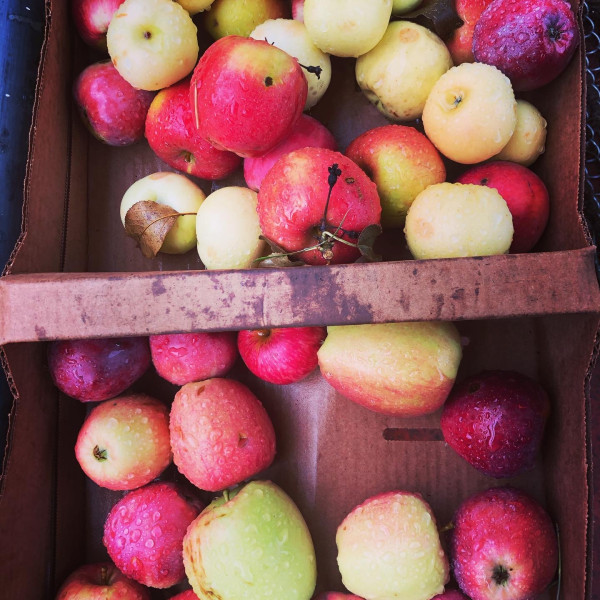
Apples and quince are ready when they come off the tree easily, and elderberries should either be a dark gray-blue or nearly black, depending on the type. Don’t use the red variety, as it is slightly toxic.
There are many wonderful ways to process all these fruits. Pears, apples, and quince can all be made into sauce and canned (or made into fruit leather in the dehydrator). They can be made into butters and jams or canned in chunks with a syrup. They can also be dried in a dehydrator. Elderberries can most easily be dried for later use in syrups and sodas, or frozen. If you like wine, elderberries make a wonderful wine.
There are a number of recipes for these fruits on my website in the recipes section. https://nettlesandrosespermaculture.com/recipes/

The quince is a nearly forgotten but delicious fruit.
Plums are also ripe now, so make use of them! You can cut them in half, remove the pits, and dehydrate them, stew them, or make them into jams. If you have gages, they’re a wonderful addition to gin, steeped with spices. And prune plums are lovely in a torte.

The Brooks Prune is outstanding.

Brooks Prunes canned in syrup.
If you have a crabapple tree, your crabapples are probably ripe. You can make crabapple jelly from them, or if you’re tired of jelly, you can do what I do: cook them together with whatever berries you have in your freezer, and make a sauce. Last year I made a crabapple blackberry sauce and canned it, and it was deluxe. This is a good way to make space in your freezer.
If you still have string beans, pick them and either dry them, pickle them with dill and garlic, or blanch and freeze them, and if you’re still getting peppers, dry or ferment them! I like to make pickled jalapeños, and I dry the Padron peppers that have grown big, red, and very spicy. I powder the dried Padrons and use in place of cayenne.

Crabapples and blackberries about to become sauce.
3. It’s time for seed saving, too.
If you plan on saving your seeds, make sure you’re starting out with heirloom plants, not hybrids. You can save seeds from tomatoes, peppers, asparagus, calendulas, ground cherries, lettuces, kale, arugula, dill, chard, fennel, sunflowers, and many other flowers. Make sure they’re dry before you store them in a cool, DRY, dark place. If you’ve isolated some squash flowers after fertilizing, by all means, save those seeds, but only if you’ve isolated the flower. Otherwise, you may end up with a disappointing surprise next year when you harvest from the plants grown from your saved seeds.
And now to the garden cleanup…
Many of your vegetable plants are probably nearly dead by now, and it’s time to clean up the beds. Instead of pulling them up, which deprives the soil of organic matter and some nutrients, snip them off at soil level. If they have a disease of some sort, throw them in the trash; otherwise, compost them. We have a dead plant compost pile. In October it’s a four-foot heap of dead plants, prunings, and pulled weeds, and in the spring it’s compost! If the plants are small and healthy, you can lay them directly on the soil.
If you have a persimmon tree, give it a bit of extra water this month, unless you’re getting rain. If the tree gets too dry, it may drop its fruit before it ripens.


Dried persimmon slices are a delicious snack.
This is the perfect time to plant some fall/winter crops!
I can’t sow most seeds directly into the soil, because the outdoor cats roll around in the dirt and stomp on the tiny seedlings, so I start things in my greenhouse, but if you don’t have that problem, feel free to plant seeds into the ground. You can plant lettuces of many types: kale, arugula, cilantro, beets, winter cabbage, and parsley. You may not get huge beets so late in the season, but you’ll get lots of delicious nutritious beet greens. Some varieties of carrot can also be planted now.
Once your plants sprout, check them regularly for slugs. If your garden is anything like mine, you’ll probably have to put out some beer traps for those fleshy slimebags. If you don’t want to buy beer, you can mix a packet of yeast with a Tablespoon each of flour and sugar, and a cup or two of water, and put this in a pan in the ground, setting the lip of the pan at soil level so that slugs can easily get in.
If you haven’t already done this, bring your potatoes in to cure ASAP. If you leave them in the ground too long, they get full of wire worms, and the result is pretty revolting!
Finally, while September is a tad early, you can plant garlic.
Any time between now and early December is ok. It’s very easy: just separate the cloves of garlic but DO NOT PEEL THEM. Poke them into the ground, with the pointy end facing up, about an inch below the ground level. The end that was attached to the stem and root of the garlic should be on the bottom. One of the great things about growing garlic is that you almost never have to water it. It grows through the fall, winter, and spring, and when things are getting dry, like in June, you harvest it.

It's also a good time to relax and enjoy the changing light.
I hope this to-do list is helpful to you. Just remember, you probably don’t have to get it all done in September, unless you live in Alaska or northern Canada possibly, where the summer transitions to winter quickly.
Be kind to yourself, and if necessary, finish up these chores in October!

Just to let my readers know: I’m an Amazon affiliate, and I get a small commission when people purchase the items linked in my articles.