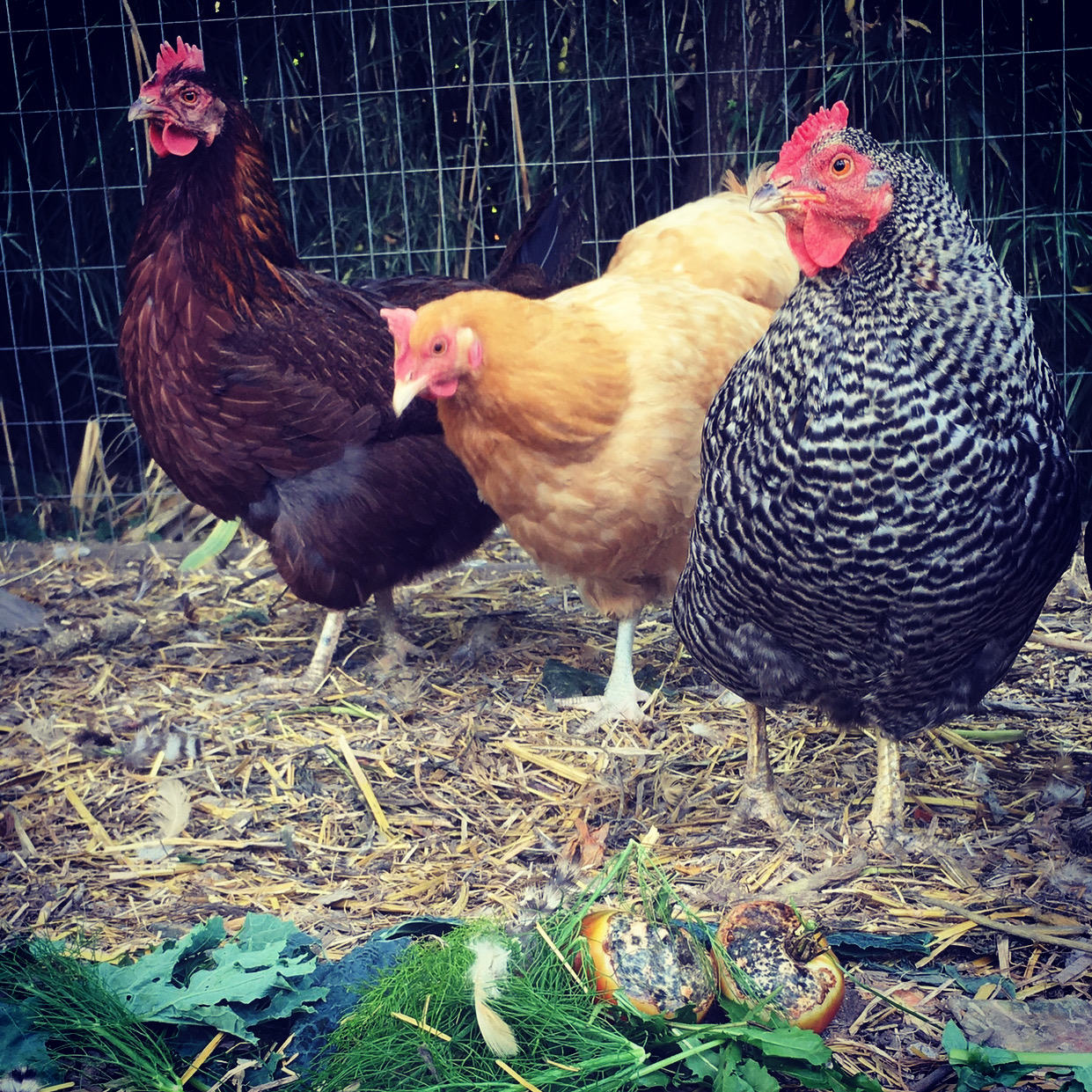
This is part of a new series of blog posts for beginner gardeners. These posts may be a little shorter and more specific in nature.
It’s that quiet time of year, when most of the canning is done, and the last storm of holidays will soon be past.
The cats sleep on the windowsills in the afternoon and by the fireplace at night. The sun is low, the chickens are quiet, and the plants look more dry and leafless with each passing day. This is a good time to start thinking about next year’s garden.
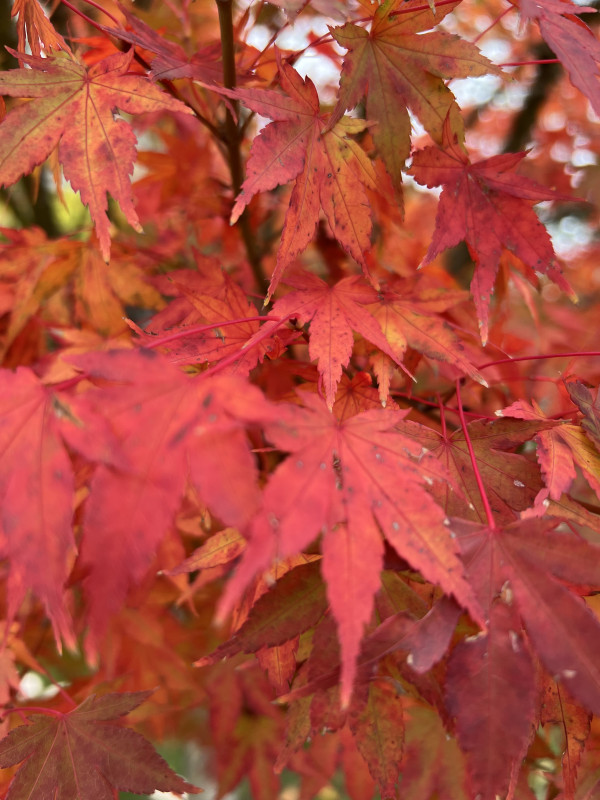
Even though the colors are vivid, they make me think of the quieting down that happens in Autumn.
I drool over the beautiful seed catalogs that arrive each fall, fantasizing about the delicious meals I will make from yard long beans or an exotic French squash; the descriptions of each vegetable make my mouth water. It’s easy to forget to leave room for flowers, especially pollinator plants.
It seems that almost every day I see an article about the insect apocalypse that is taking place all over the world.
Bees die from neonicotinoids or BT crops, fireflies are killed by lawn chemicals, some insects are lost when their habitat gets turned into a farm or a housing development, and others get wiped out by natural disasters such as fire or flood.
Whatever the reason, pollinators are in trouble, and they need our help. And we need theirs!
Without pollinators, we won’t have a lot of food. So when planning your kitchen garden, please remember to include plants that will provide food for pollinators!
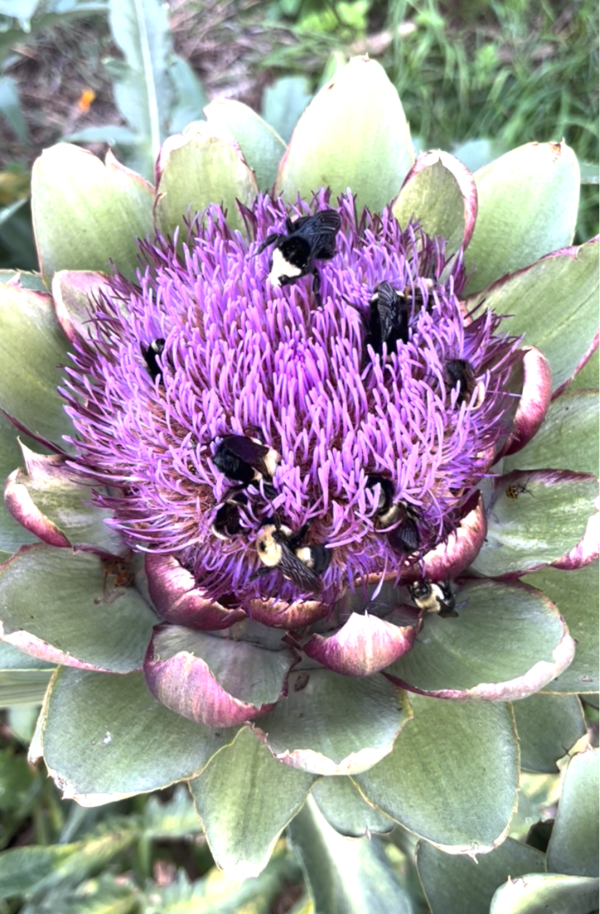
Bees love an artichoke.
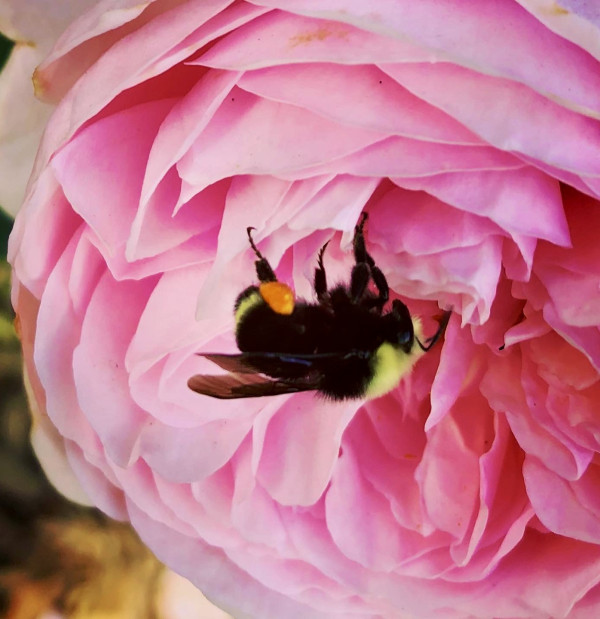
They also like roses.
I’d like to provide you with a list of plants popular with pollinators, starting with native plants, and then those non-natives which don’t take over, but before that, I wanted to start with the easiest of them all, one which you don’t have to buy seeds for or provide with a new bed. It’s not native, but it’s everywhere.
The Dandelion!
I give this one a special mention because it’s one of the earliest to flower in many cool temperate regions (like where I live), and it provides those early-bird pollinators with some much needed food.
Don’t dig them all out! And please don’t spray them!
They’re an important food source for some pollinators. They’re also edible, by the way, and nutritious: the roots can be dried and put into soups, teas, bitters, and tinctures, and they can be ground up and used as a flour.
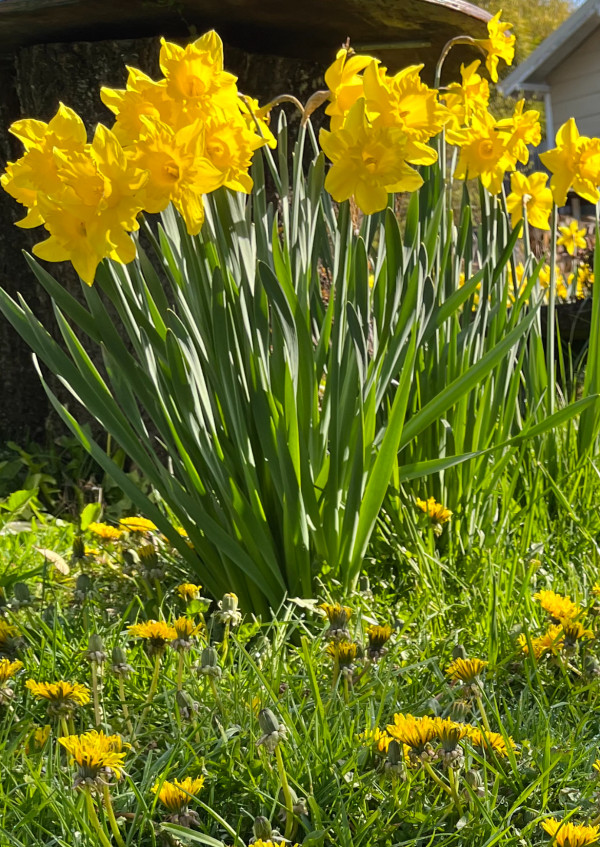
Dandelions make a lovely carpet around these daffodils.
Tara Lanich Labrie has a delicious peanut butter dandelion root cookie recipe in her book “Foraged and Grown”: https://amzn.to/4jHtDSp
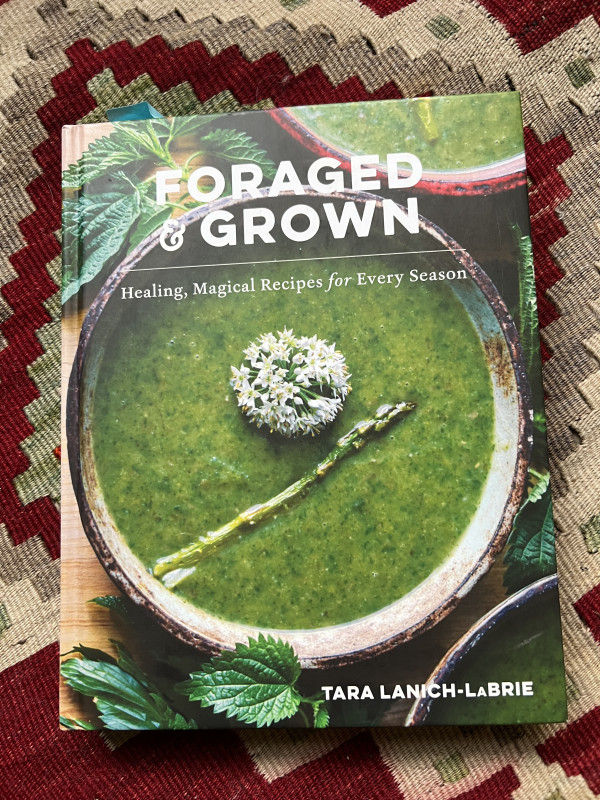
This gorgeous book is one of my favorite cookbooks.
The young leaves (before flowers emerge) taste good in a salad or stir fry, as do the flowers (check for small bugs before eating them). Some people make wine from the flowers, but I have never done this. Older leaves will taste bitter, so they’ll need to be marinated for a bit. And note that once the plant starts to flower, it focuses more of its energy on making flowers and seeds.
Here are a few of the native plants that pollinators love. Natives are important because they evolved together in relationships with the local pollinators. Some of these natives are edible, and some are definitely not. Note: when I say a plant is “edible”, I mean by humans. All of these plants are good for pollinators!
First the edible natives:
Sunflower (Helianthus annuus) – edible seeds. Good for bumble bees as well as the birds that come in late summer and fall.
Common Yarrow (Achillea millefolium) – flowers and leaves for medicinal teas
Great Camas (Camassia leichtlinii) – roots of the blue flowers ONLY, which must be very well cooked. The white flowered Death Camas is true to its name, deadly.
Wild Strawberry (Fragaria virginiana) – tasty berries.
Canada Goldenrod (Solidago canadensis) – flowers for medicinal teas.
Bee Balm (Monarda) – leaves in teas, tinctures, poultices. Used by some indigenous peoples as seasoning for game.
Dewberry (Rubus ursinus) – leaves for medicinal teas, fruits can be used like blackberries.
Oregon Native Elderberry (Sambucus cerulea) – the one with the grey blue fruits. Berries are delicious and medicinal. Used for syrups, sodas, juice, jam, and wine. Also tinctures and baked goods. This plant grows quite large.
Red Elderberry (Sambucus racemosa) – berries much be cooked before they’re eaten.
Rose Checkermallow (Sidalcea malvaflora subspecies virgata) – pink flowers, which are edible (salads). Leaves are also edible. Many mallows have roots which can be used medicinally (teas).
Douglas Aster (Symphyotrichum subspicatum) – edible but not necessarily delicious.
California Poppy (Eschscholzia californica) – leaves as garnish, seeds as tinctures.
Showy milkweed (Asclepias speciosa) – all parts (except the fluffy mature fruit) are edible if prepared right, but be careful, as it has toxic lookalikes. Also toxic to livestock, dogs, and cats, but beloved of monarch butterflies.
Farewell to Spring (Clarkia amoena) – seeds were parched and pounded into flour by indigenous peoples.
California Lilac (Ceanothus concha) – leaves can be dried and used to make a tea.
Pacific willow (Salix lasiandra) – Edible but non tasty. A famine food.
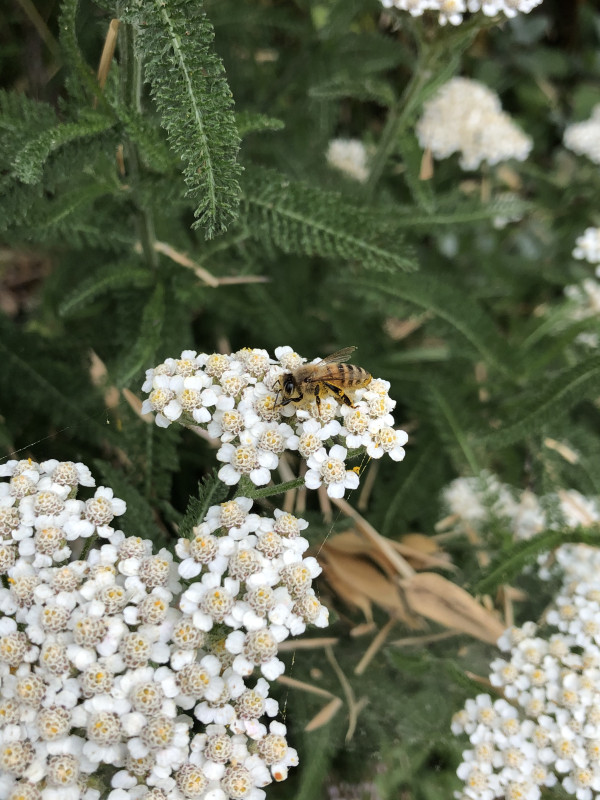
A bee on a native Yarrow.

A non-native elderberry in flower
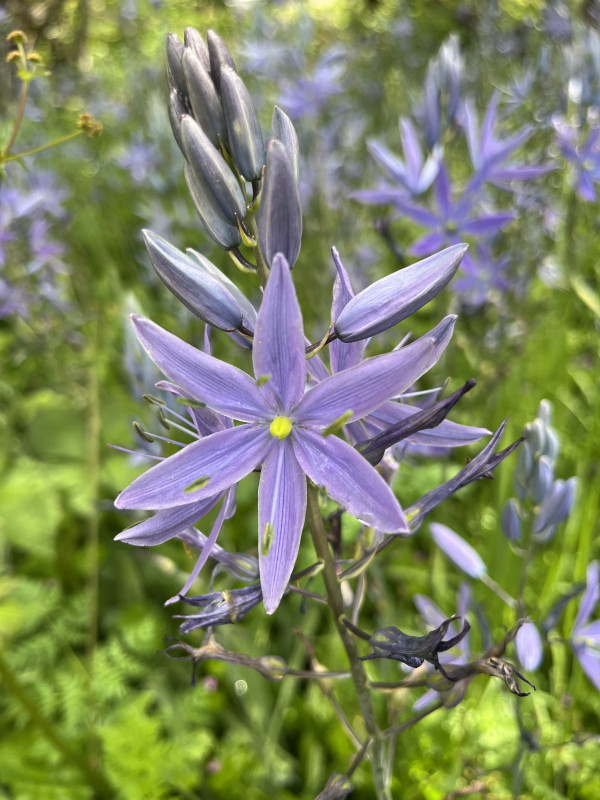
This blue camas is absolutely edible, but I recommend you leave it alone, as it is still rare.
And some non-edible natives:
Lupine (Lupinus polyphyllus) – loved by bees and hummingbirds alike.
Western Columbine (Aquilegia formosa)
Oregon Iris (Iris tenex)
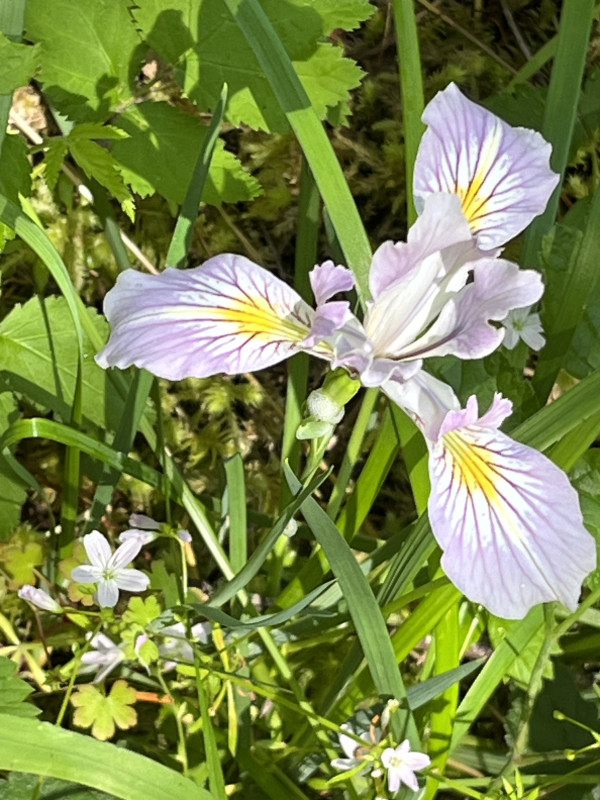
Oregon Iris is not edible!
And now some non-native plants that pollinators love. All of these are edible, and many are well known:
Oregano
Catnip – Catnip may attract cats – mine usually gets squashed by the outside cats who roll around in it.
Sage
Lamb’s Ears (Believe it or not, this one is edible – the young leaves can be battered and fried)
Mint – I recommend caution with mint, as it can take over a whole garden. Plant it in containers!
Thyme – makes a wonderful edge plant
Zinnia (edible as garnish and in salads, but grow your own to avoid toxic chemicals)
Many fruit trees – apples, plums, quince, medlar, apricot, pear, cherry, crabapples, citrus (some can survive in some pockets in the PNW, especially in a greenhouse)
European Black Elderberry (Sambucus nigra)
Rosemary
Chives and Garlic Chives
Artichoke
Lavender
Pineapple sage
So far, the focus here has been insects, but it’s a good idea to include some plants that will be food for migrating birds.
Hummingbirds are one of my favorites, and they’re fond of fuchsia (especially cape fuchsia), Digitalis, Columbine, Penstemon, HOneysuckle (look for native), bee balm, Salvia, Coral bells, Lilies, lantana, trumpet vine, Petunia, lupine, cardinal flower, hosta, cigar plant, zinnia, pelargonium, bleeding heart, lilac, snapdragon, begonia, catmint, daylily, rhododendron, wisteria, hollyhock, flowering tobacco, Morning glory (not the weed!), and chaste tree.
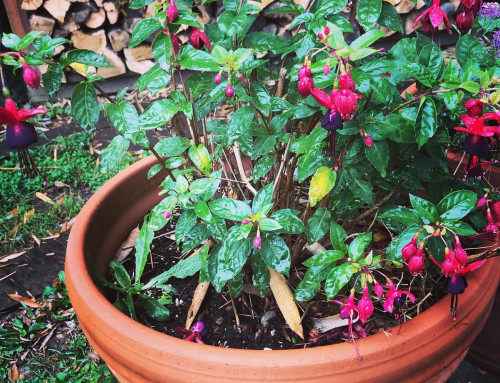
Some of these plants are annuals in the Pacific Northwest, such as Lantana and Flowering Tobacco, but others are perennial. Fuchsias, with the exception of Cape Fuchsia which thrives and is beloved of hummingbirds, usually freeze in the Pacific Northwest winters, but you can cut them back and bring them indoors, and set them out again next spring. You can also try to root the cuttings that you took when cutting back the fuchsia.
You may end up becoming the fuchsia king or queen!
You certainly don’t need to plant ALL of these plants for the birds and the bees, but plant as many as you can. Besides giving your garden lots of color and crowding out weeds, planting a variety of species may feed a larger array of insects and birds. You may also have a longer season of blooming flowers, which means more food over a longer time span for your pollinators. It can’t hurt to overplant.
And I have a confession to make – I try to clone almost everything that I have snipped off a plant, even from trees! I just can’t throw away the opportunity to grow yet another plant.
After all, what’s the worst that could happen? I’d have too many plants and have to give some to neighbors, whose yards would fill up with flowers and seeds, which means even more food for pollinators!

Bee balm and bee